How to Choose the Right Grade of Indian Basmati Rice for International Markets?
SeedVantage Global Exports Co

Connect With SeedVantage Global Exports Co. For Reliable Agro Product Solutions Today.
Padmini Palace Road, Anand Nilaya, Plot No. 25/375, Bartoli, Rourkela, District Sundargarh, Odisha, 769042, India
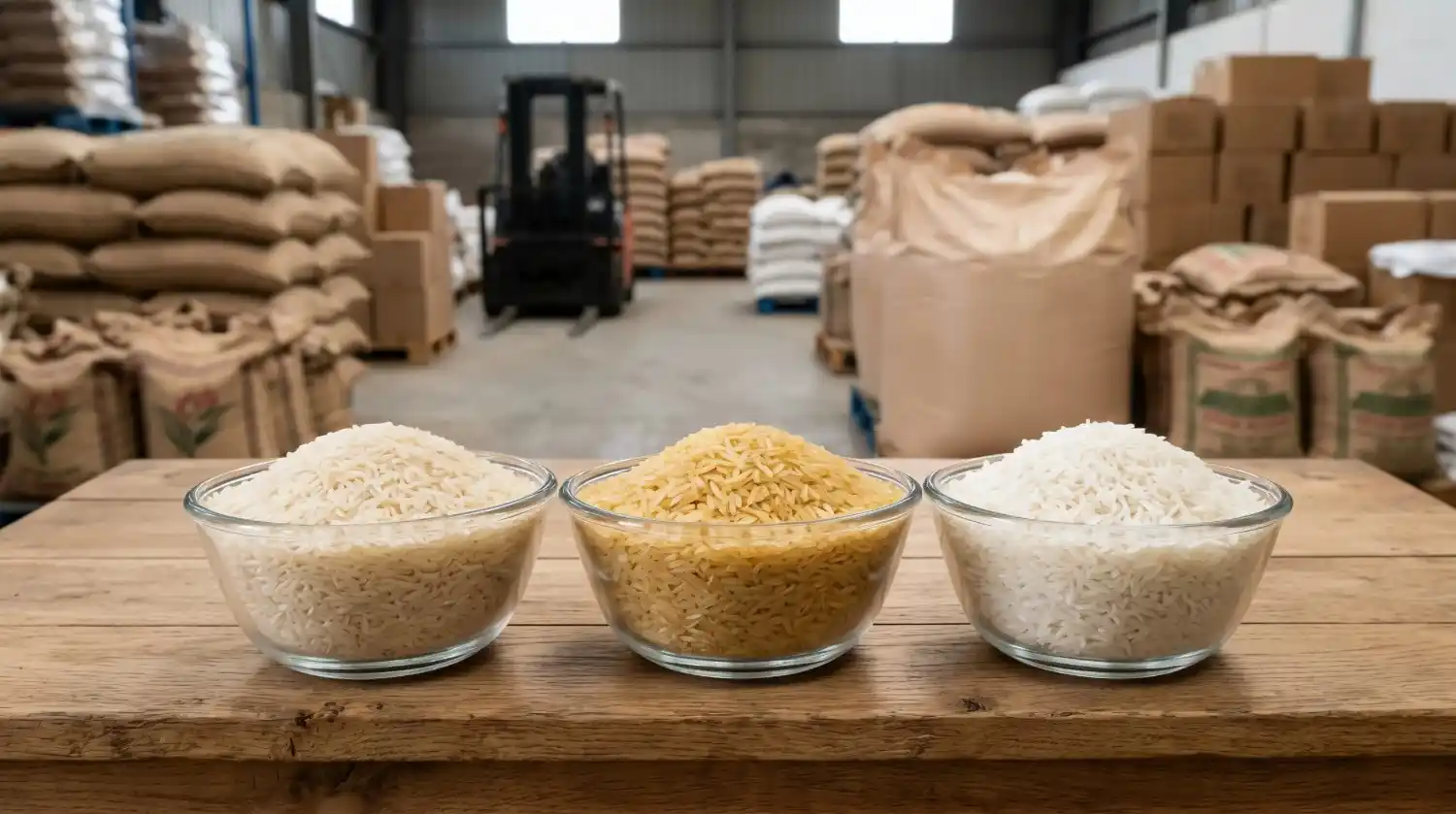
You open a box. Smell comes first, floral, nutty, definitely not any other basmati. Your buyer in Dubai has a smile on his face. Your Berlin Buyer? He has already started to read the rejection clause. Same rice. Two different outcomes. That's the grade issue that no one mentions when they first decide to Export Basmati Rice. It's not just the Indian basmati; it is the correct Indian basmati which the world market is looking for.
Most new exporters consider grading a "formality". It's not. It is all about you and your pricing ability. A certified Grade 1 extra-long basmati gives its rice a premium shelf space in the European retail chains. The same rice, with the same labelling, but at the wrong grade, held by customs in both the UK and UAE. The knowledge of grading isn't a risk management thing with the Basmati Rice Exporters, it's a leverage thing. The better the grade documentation, the more trust the buyer has in the company. Improved Buyer's Trust translates to improved Contracts. That's not paperwork. That's profit.
If you are aiming at UAE and Saudi Arabia, then 1121 is not an option, it's a requirement.
Many exporters focus on variety and neglect the importance of processing. This is a critical business error.
Processing Basmati affects the texture, shelf life & cooking behavior — and defines which market Basmati will cater to. You need to know exactly which form the client will order before you finalize the export order.
This is the best Basmati and is cream colored, naturally aged and naturally Basmati raw is very delicate. Because of this delicateness, it cannot be handled in bulk. That's why it is best suited for the fine and specialized import markets.
Through parboiling, nutrient-rich Basmati grains that are robust and unbreakable are formed. This is a bulk user’s and first time exporter’s best choice of Basmati rice. This is best suited for all Middle East Basmati catering and institutional markets.
This is Basmati which looks raw, but has the cooking behavior of Sella. This is best suited for retail Basmati and for online Basmati markets. Whenever your client’s customers review a product, cooking behavior consistency protects your client’s and your reputation.
This Basmati still has the bran and thus is more nutritious and has a lower glycemic index. It is being marketed in the Basmati specialty markets of the US, the UK and Australia. Although this market is not the biggest, the growth rate of this market is so high that it is definitely worth an early investment.
Did You Know?
Aged basmati rice — stored for a minimum of one year — actually commands a higher Basmati Rice Price in export markets because aging reduces moisture and intensifies both aroma and grain elongation after cooking.
Jasmine and basmati aren't competitors — they serve entirely different markets, cuisines, and price brackets. Before you Export Basmati Rice, understand exactly where it wins. The table below shows you the difference that matters.
|
Feature |
Jasmine Rice |
Basmati Rice |
One-line takeaway |
|
Grain length |
Short to medium |
Extra-long (can reach 22 mm when cooked) |
Basmati looks elegant; jasmine is compact. |
|
Aroma |
Mild, floral |
Bold, nutty, distinctly aromatic |
Choose jasmine for subtle scent, basmati for stronger perfume. |
|
Texture after cooking |
Soft and slightly sticky |
Fluffy, separate, non-sticky |
Jasmine clings (good for chopsticks); basmati separates (great for plated dishes). |
|
Primary origin |
Thailand, Vietnam |
India, Pakistan |
Different terroirs, different characters. |
|
Best market fit |
Southeast & East Asia |
Middle East, Europe, North America |
Jasmine wins regional staples; basmati wins premium shelves. |
|
Cooking style |
Stir-fries, steamed dishes |
Biryani, pilaf, fine dining |
Match rice to texture and showmanship. |
|
Shelf life |
Shorter |
Longer — improves with aging |
Basmati benefits from time; jasmine is best fresh. |
|
Export price point |
Budget to mid-range |
Mid-range to ultra-premium |
Basmati commands higher prices. |
|
Health profile |
Moderate glycemic index |
Lower GI, especially aged varieties |
Basmati may be better for blood-sugar control. |
|
Buyer preference |
Volume-driven markets |
Quality-driven, premium markets |
Jasmine sells on quantity; basmati sells on prestige. |
|
Certification demand |
Standard food-safety compliance |
GI tag, APEDA and origin certifications often required |
Basmati faces stricter origin rules for exports. |
Did You Know?
The Middle East alone imports over 1 million metric tons of Indian basmati every year — making it the single largest destination market for basmati rice exporters worldwide.
Different rice grades must be sent to their respective consumers. Sending the wrong one results in loss of profit and customers. Read below to discover the suitable buyers for your rice variety.
Retail Pack: Basmati rice (steamed and raw) easily found their way into supermarkets due to their aesthetically pleasing nature.
Bulk Buying: Basmati rice finds itself in canteens, hospitals, and on airplanes due to its quality.
Online Retail: Aged basmati rice are varieties that sell for higher profits when found in online stores.
Fine Dining: High-end restaurants procure their basmati rice from reliable and trusted basmati rice.
Health Food Store: The entry grade into organic and health-related grocery stores are brown basmati.
Government Contracts: Low-grade basmati rice of certified quality is seen in large scale procurement by governments.
Private Label: Varieties like 1509 are common basmati rice varieties across global markets due to high-end pricing.
Did You Know?
APEDA (Agricultural and Processed Food Products Export Development Authority) regulates every shipment of basmati leaving India — without their certification, your consignment cannot legally be exported as basmati rice in international markets.
Understanding basmati rice grades, filling basmati rice export documentation, and understanding the global market can be overwhelming! Seed Vantage is here to help. If you want to buy the Best Basmati Rice for a particular buyer, find out the Basmati Rice Price for your target market, or want to contact reliable verified Basmati Rice Exporters, Seed Vantage will help you with all your requirements. From exporting basmati rice with confidence to guiding first-time importers looking to Import Basmati Rice from India, we at Seed Vantage have it all. Just visit us at Seedvantage
SeedVantage Global Exports Co Is a progressive agro business that manufactures, supplies, distributes and exports top class agri-produce to both domestic and international markets. With their headquarters located in Rourkela, Odisha, the company offers a product portfolio that covers Basmati Rice, Sesame Seeds, Cumin Seeds, Moringa powder, Onion Powder, Banana powder as well as fresh fruits and vegetables. Under the command of their Director Mr. Pankaj Allampalli, the agro company has contributed towards revolutionary changes in the agro export industry by ensuring quality, a global reach in terms of logistics and high standards of compliance. Relying on years of expertise, they cater to buyers all over the globe.
The global basmati market doesn't reward guesswork. It rewards exporters who know exactly what they're shipping, who they're shipping it to, and why that grade belongs in that market. Every decision — variety, processing, grade — either builds your reputation or quietly damages it. The Basmati Rice Exporters winning long-term contracts aren't luckier than you. They're just better informed. Now you are too. And if you're still figuring out how to Export Basmati rice the right way — the only question left is, what's your next move?
| Contact Us Seed Vantage today and start your basmati export journey the right way. |
1121 extra-long grain basmati is the most preferred and highest-demanded grade across Gulf markets.
Jasmine suits volume-driven Asian markets while basmati dominates premium markets in the Middle East and Europe.
APEDA certification is legally required for every basmati shipment leaving India for international markets.
Basmati rice price varies by grade, variety, and processing — 1121 raw commands the highest rate globally.
Sella (parboiled) basmati is the most resilient form and handles long sea freight without grain breakage.
Yes — India has a large network of APEDA-certified exporters who handle private label packaging for international buyers.
Yes — health food retail and organic grocery chains across the US, UK, and Australia are actively growing this category.
We deliver premium quality rice, fresh fruits, and vegetables straight from farms to your doorstep, ensuring freshness, health, and trust in every order.